
Perrotis School of Sciences
(B.Sc.) Food Science
Essentials
Program
Undergraduate
Duration of study
4 years
Language
English
Method
In-person
Overview & Aims
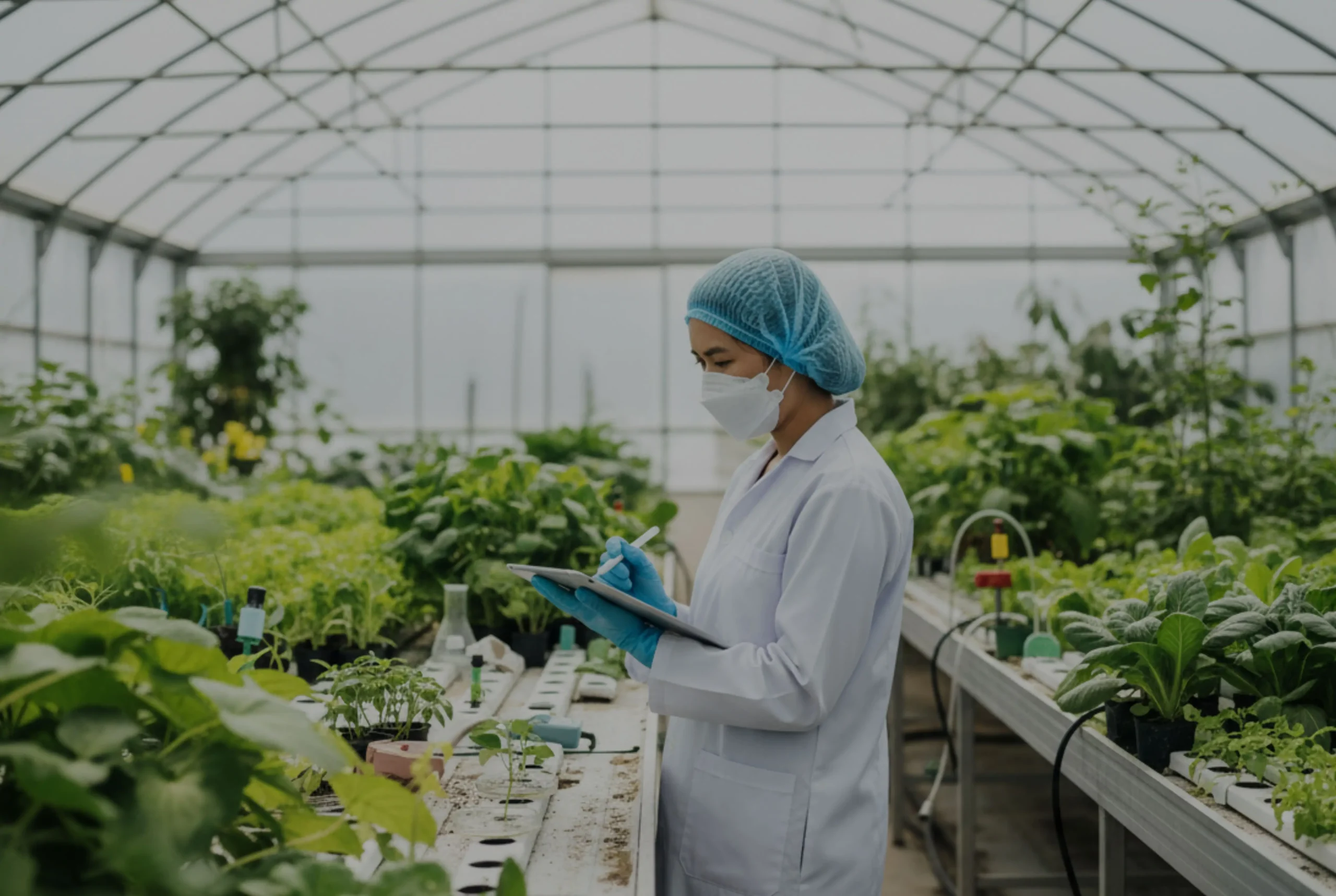
The Bachelor of Science (B.Sc.) in Food Science is an interdisciplinary, professionally oriented, and science-based academic programme designed to prepare graduates for careers across the global food system. The programme integrates core disciplines including Chemistry, Microbiology, Engineering, Nutrition, and Sensory Analysis, with the aim of studying food systems from raw material production to final consumption. It supports the development of safe, high-quality, nutritious, sustainable, and innovative food products.
The curriculum combines a strong foundation in the natural and biological sciences with specialized education in Food Chemistry, Food Microbiology, Food Safety, Food Technology and Processing, Quality Assurance, Food Legislation, and New Product Development, providing a solid basis for professional competence in the field of Food Science.
Students acquire a robust theoretical background complemented by extensive laboratory training, hands-on experience in pilot-scale processing units, data analysis, and applied research and product development. Teaching laboratories and technological infrastructure foster experiential learning and strengthen the application of scientific principles in real-world production environments, food safety management systems, and innovation processes.
In addition to technical expertise, the programme promotes professional communication, ethics, leadership, teamwork, and a global perspective. Graduates are prepared for employment in the food industry, research institutions, and regulatory and inspection authorities, in areas such as product development, quality assurance, food safety management, sensory evaluation, food production and operations management, sales and marketing, as well as governmental or academic research. Furthermore, graduates are equipped to address contemporary challenges related to food security, sustainability, public health, and innovation within the agri-food sector.
**Pending Approval
Modules
| YEAR 1
|
||
| Fall Semester
|
||
| Course Code | Course | ECTS |
| ENGL 1500 | Critical Thinking and Communication | 5 |
| CHEM 1770 | General Chemistry I | 8 |
| CHEM 1770L | Laboratory in General Chemistry I | 2 |
| MATH 1650 | Calculus I | 8 |
| NREM 2700 | Foundations in Natural Resource Policy and History | 5 |
| LIB 1600 | Introduction to College Level Research | 2 |
| FSHN 1100 | Professional and Educational Preparation | 2 |
| TOTAL ECTS | 32 | |
|
|
||
| Spring Semester
|
||
| Course Code | Course | ECTS |
| ENGL 2500 | Written, Oral, Visual and Electronic Composition | 5 |
| PHYS 1150 | Physics for the Life Sciences | 7 |
| PHYS 1150L | Physics for the Life Sciences Laboratory | 2 |
| STAT 1040 | Introduction to Statistics | 6 |
| FSHN 1010 | Food and the Consumer | 6 |
| CHEM 1780 | General Chemistry II | 6 |
| TOTAL ECTS | 33 |
| YEAR 2
|
||
| Fall Semester
|
||
| Course Code | Course | ECTS |
| BIOL 2120 | Principles of Biology II | 6 |
| BIOL 2120L | Principles of Biology II Laboratory | 2 |
| GEN 2100 | Environment and climate change | 6 |
| CHEM 2310 | Elementary Organic Chemistry | 8 |
| CHEM 2310L | Elementary Organic Chemistry Laboratory | 2 |
| FSHN 1670 | Introduction to Human Nutrition and Health | 6 |
| TOTAL ECTS | 30 | |
|
|
||
| Spring Semester
|
||
| Course Code | Course | ECTS |
| ENVS 2200 | Globalization and Sustainability | 6 |
| SPCM 2120 | Fundamentals of Public Speaking | 5 |
| FSHN 2030 | Contemporary Issues in FSHN | 2 |
| FSHN 2070 | Processing of Foods: Basic Principles and Applications | 6 |
| MICRO 3020 | Biology of Microorganisms | 6 |
| MICRO 3000L | Microbiology laboratory | 2 |
| FSHN 4030 | Food Laws and Regulations | 4 |
| TOTAL ECTS | 30 |
| YEAR 3
|
||
| Fall Semester
|
||
| Course Code | Course | ECTS |
| FSHN 3420 | World Food Issues | 5 |
| FSHN 3510 | Introduction to Food Engineering Concepts | 6 |
| FSHN 3110 | Food Chemistry | 6 |
| FSHN 3110L | Food Chemistry Laboratory | 2 |
| BBMB 3160 | Principles of Biochemistry | 6 |
| FSHN 4200 | Food Microbiology | 6 |
| TOTAL ECTS | 31 | |
|
|
||
| Spring Semester
|
||
| Course Code | Course | ECTS |
| FSHN 301X | Nutrigenomics: From Basic Science to Translational Impact | 2 |
| FSHN 3050 | Food Quality Management and Control | 4 |
| FSHN 4060 | Sensory Evaluation of Food | 6 |
| FSHN 4210 | Food Microbiology Laboratory | 6 |
| FSHN 4070 | Microbiological Safety of Foods of Animal Origin | 6 |
| FSHN 4100 | Food Analysis | 6 |
| TOTAL ECTS | 30 |
| YEAR 4
|
||
| Fall Semester
|
||
| Course Code | Course | ECTS |
| FSHN 4900B | Independent Study: Food Science | 6 |
| FSHN 4910B | Supervised Work Experience: Food Science | 2 |
| FSHN 4120 | Food Product Development | 6 |
| FSHN 4710 | Food Processing | 6 |
| FSHN 4720 | Food Processing Laboratory | 4 |
| HORT 2760 | Grape and Wine Science (*) | 6 |
| FSHN 4770X | Dairy Products and Dairy Processing (*) | 6 |
| TOTAL ECTS | 30 | |
|
|
||
| Spring Semester
|
||
| Course Code | Course | ECTS |
| FSHN 4990 | Undergraduate Research | 12 |
| FSHN 5220 | Advanced Food Microbiology and Biotechnology | 4 |
| GEN 4100 | Mediterranean Diet: Science & Culture | 6 |
| FSHN 4110 | Food Ingredients Interactions & Formulations | 4 |
| FSHN 3140 | Professional Development in Food Science | 2 |
| FSHN 3150 | Professional Skills in Food Science | 2 |
| TOTAL ECTS | 30 |
| TOTAL PROGRAM ECTS | 245 |
Upon completion of the program, students will be able to:
- Analyze and interpret food systems based on chemical, physical, and biological principles, evaluating the impact of composition, structure, microbial activity, and processing conditions on functionality, safety, nutritional value, shelf life, and product stability.
- Apply and document appropriate analytical, microbiological, sensory, and engineering methods for the evaluation of raw materials, processing operations, and final products at laboratory, pilot, and industrial scale.
- Design, implement, and evaluate food safety, quality, and processing systems in accordance with current regulatory, industrial, and environmental requirements, integrating principles of risk management and innovative product development.
- Collect, analyze, interpret, and critically evaluate scientific and technical data, formulating evidence-based conclusions through the use of statistical tools and contemporary forms of scientific communication.
- Demonstrate professional ethics, adherence to laboratory safety regulations, responsibility, leadership skills, and teamwork in academic, research, and professional environments within the field of Food Science and Technology.
Food scientists are employed in the food industry, academia, as well as in non-profit and governmental organizations. A degree in Food Science can lead to a wide range of career opportunities, including:
- Food Analytics and Testing
- Food Chemist
- Food Microbiologist
- Food Production/Operations
- Product Development Scientist
- Quality Assurance Supervisor
- Regulatory/Food Safety Manager
- Research & Development Scientist
- Sensory Food Technologist
The Admissions & Enrolment Team, together with all School Chairs, are available to support prospective students and their families. They are happy to answer questions regarding academic programmes, career prospects after graduation, campus life, admission requirements and procedures, and to arrange a personalized tour of our facilities and campus. To ensure the best possible experience, visits are arranged by prior appointment.
For any inquiries, you may contact us by email at admissions@afsuniversity.edu.gr or by phone at +30 2310 492 810 and +30 2310 492 854.
To learn more about admissions please visit Undergraduate Programs Requirements.
Apply Now
Dean, School of Sciences
Dr. Kiriaki Zinoviadou
Associate Professor of Food Technology. She holds a BSc in Agriculture from Aristotle University of Thessaloniki (AUTH), an MSc in Food Science from Wageningen University, Netherlands, and a PhD in Food Science from Aristotle University of Thessaloniki (AUTH).
Dr. Sofia Lalou
She holds a BSc in Chemistry and an MSc and PhD in Chemistry and Food Technology from the Department of Chemistry at Aristotle University of Thessaloniki (AUTH). She has also conducted postdoctoral research at the School of Sciences, Department of Chemistry, AUTH.
Dr. Avgoustina Galitsopoulou
She holds a BSc in Agronomy from AUTH, an MSc in Food Science and Technology from the School of Agriculture, AUTH, and a PhD in Food Chemistry from the Department of Industrial Chemistry and Food Chemistry, University of Ioannina.
Dr. Kiriaki Chatzikiriakidou
She holds a BSc in Agriculture from Aristotle University of Thessaloniki (AUTH), a BSc in Informatics from the School of Science and Technology, Hellenic Open University, an MSc in Food Science and Technology from the School of Agriculture, AUTH, and a PhD in Food Science and Technology from the School of Agriculture, University of Wisconsin–Madison, USA.
Dr. Christos Ritzoulis
He holds a BSc in Chemistry from the Department of Chemistry, Aristotle University of Thessaloniki (AUTH), an MSc in Food Science from the Procter Department of Food Science, University of Leeds, UK, and a PhD in Food Technology from the University of Leeds, UK.
Dr. Panagiotis Kampouridis
He holds a BSc in Biology from Aristotle University of Thessaloniki (AUTH), an MSc in Molecular Biology from San Diego State University, California, USA, and a PhD in Molecular Biology from a joint doctoral program between the University of California at San Diego and San Diego State University, USA.
Dr. Theofilos Fragkopoulos
He holds a BSc in Agronomy and an MSc in Food Science and Nutrition from AUTH, and a PhD in Food Technology from the International Hellenic University.
Dr. Stefania Lampoura
She holds a BSc in Physics from Aristotle University of Thessaloniki (AUTH), an MSc in Physical Chemistry from the University of Groningen, Netherlands, and a PhD in Experimental Biophysics and Physical Chemistry from Vrije Universiteit Amsterdam, Netherlands.
Dr. Christos Vasilikiotis
Associate Professor of Sustainable Agriculture and Management. He holds a BSc in Biology from Aristotle University of Thessaloniki (AUTH), an MSc in Agronomy from Iowa State University, USA, and a PhD in Molecular and Cellular Biology from the University of California, Berkeley.
Dr. Konstantina Nanou
She holds a BSc in Agronomy, an MSc and a PhD in Food Science and Technology from the Department of Agriculture, Aristotle University of Thessaloniki (AUTH). She has also conducted postdoctoral research in the Food Science and Technology Division, School of Agriculture, AUTH.
Dr. Georgios Stravodimos
He holds a BSc in Biochemistry and Biotechnology from the University of Thessaly, Greece, an MSc in Biotechnology – Quality of Nutrition and Environment from the University of Thessaly, Greece, and a PhD titled “Biochemical Studies of Enzymes of Glycogen Metabolism” from the Department of Biochemistry and Biotechnology at the University of Thessaly, Greece.
Dr. Athanasios Falaras
He holds a BSc in Applied Mathematics and Physical Sciences from the National Technical University of Athens (NTUA), an MSc in Information Systems from the University of Macedonia, and a PhD in Business Organization and Management from the Department of Business Organization and Management, University of Macedonia.
Dr. Ilias Kalfas
He holds a BSc in Agronomy from Aristotle University of Thessaloniki (AUTH), a BSc in Entomology from Imperial College of Science, UK, an MSc in Quality Management Systems and Production Management in the Food Industry from Alexander Technological Educational Institute of Thessaloniki, Greece, and a PhD in Tri-trophic Interactions among Olive Varieties from Imperial College of Science, UK. He also completed a Postdoctoral Fellowship at AUTH, School of Geology, Department of Climatology.
Dr. Eleftherios Pavlou
He holds a BSc from the Faculty of Agriculture at Aristotle University of Thessaloniki (AUTH), an MSc in Animal Production from the Faculty of Agriculture, AUTH, and a PhD in Animal Production from the Faculty of Agriculture, AUTH.
Georgios Kartsioris, M.Sc.
He holds a BSc in Mathematics from Aristotle University of Thessaloniki (AUTH), a BSc in Applied Informatics from the University of Macedonia, an MSc in Advanced Computer and Communication Systems from the Department of Electrical and Computer Engineering, AUTH, and an MSc in Theoretical Computer Science and Systems Theory from the Department of Mathematics, AUTH. He is also a PhD candidate at the Department of Applied Informatics, University of Macedonia, researching “Optimization and Computations with Nature-Inspired Algorithms.
Sophia Sotiriou, M.Sc.
She holds a BSc in English Language and Literature from Aristotle University of Thessaloniki (AUTH) and an MSc in American Literature and Culture from AUTH.
Learn more
The University Regulations of the AFS University of Science & Technology – University Legal Entity, defines the framework for the organization, governance, and operation of the University, ensuring its effective functioning and full compliance with the applicable legal and regulatory framework.
It is founded on the principles of transparency, accountability, and academic excellence, and sets out the rights and obligations of the university community, as well as the procedures for oversight and enforcement of institutional rules.
Its content is subject to continuous review and updating in order to respond to evolving academic, regulatory, and operational requirements.