
Kravvas School of Agriculture & Natural Resources
(B.Sc.) Horticulture
Essentials
Program
Undergraduate
Duration of study
4 years
Language
English
Method
In-person
Overview & Aims
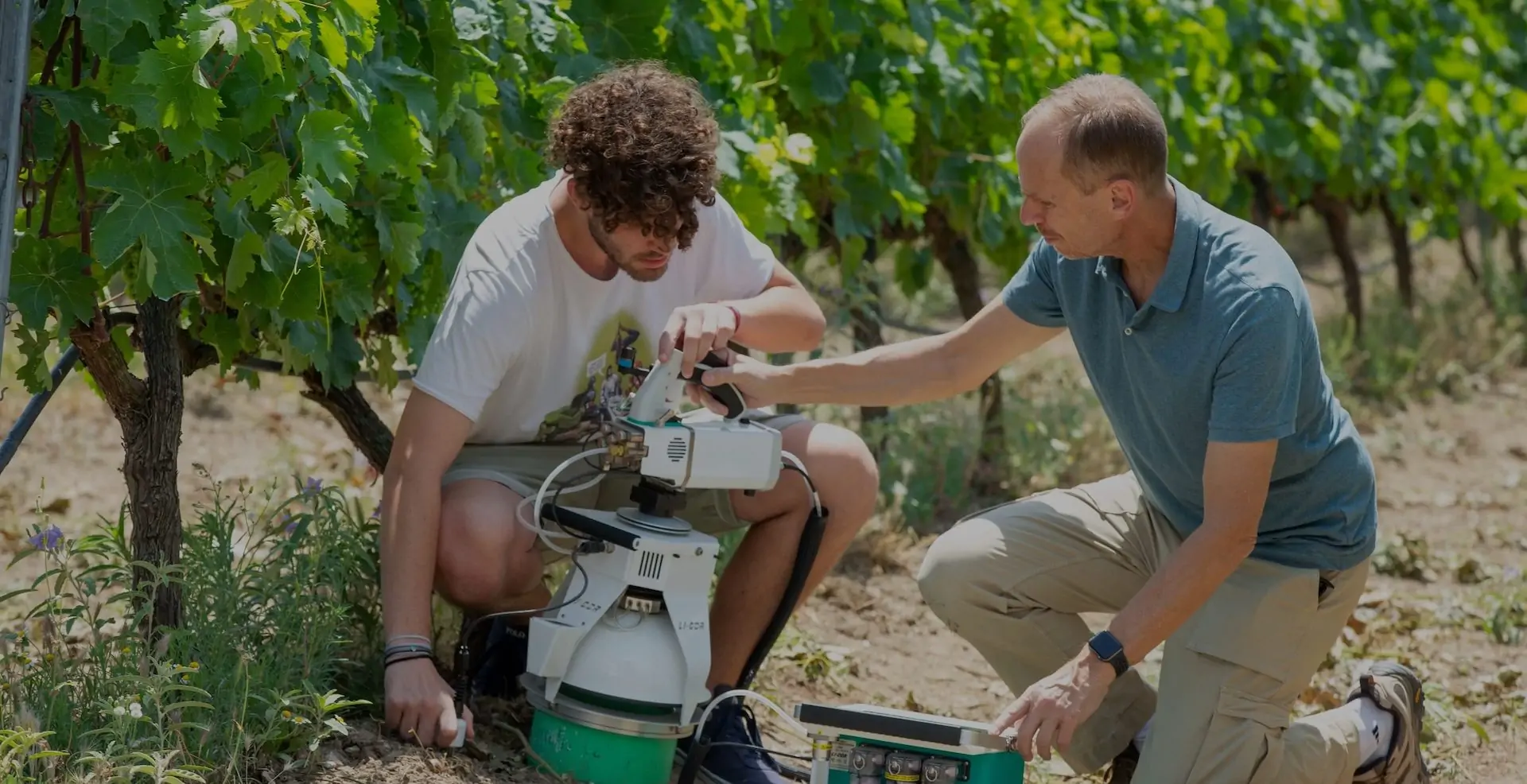
The Bachelor of Science (B.Sc.) in Horticulture provides students with the opportunity to pursue a personalized academic pathway. The broad range of subject areas, spanning from the theoretical foundations of plant physiology to the applied cultivation of vegetable crops, tree crops, and field crops, is supported by a multidimensional curriculum designed to address the diverse needs and academic interests of the student body.
Graduates acquire the technical knowledge and practical competencies required to develop as professionals in the field. They demonstrate a solid understanding of the fundamental principles of the biosciences, plant growth and development, and are well-versed in cultivation and management practices across a wide spectrum of crops. They are capable of collaborating and communicating effectively with fellow professionals, as well as with all stakeholders of the market who share an interest in the sector. Furthermore, they recognize and critically engage with the ethical and environmental dimensions of the challenges faced by professionals in plant production.
**Pending Approval
Modules
| YEAR 1
|
||
| Fall Semester
|
||
| Course Code | Course | ECTS |
| ENGL 1500 | Critical Thinking and Communication | 5 |
| CHEM 1770 | General Chemistry I | 8 |
| CHEM 1770L | Laboratory in General Chemistry I | 2 |
| ECON 1010 | Principles of Microeconomics | 6 |
| NREM 2700 | Foundations in Natural Resource Policy and History | 5 |
| LIB 1600 | Introduction to College Level Research | 2 |
| HORT 1100 | Professional and Educational Development in Horticulture | 2 |
| TOTAL ECTS | 30 | |
|
|
||
| Spring Semester
|
||
| Course Code | Course | ECTS |
| ENGL 2500 | Written, Oral, Visual and Electronic Composition | 5 |
| BIOL 2110 | Principles of Biology I | 6 |
| BIOL 2110L | Principles of Biology Laboratory l | 2 |
| STAT 1040 | Introduction to Statistics | 6 |
| AGRON 1820 | Introduction to Soil Science | 6 |
| HORT 2210 | Principles of Horticulture Science | 6 |
| TOTAL ECTS | 31 |
| YEAR 2
|
||
| Fall Semester
|
||
| Course Code | Course | ECTS |
| BIOL 3130 | Principles of Genetics | 6 |
| BIOL 3130L | Genetics Laboratory | 2 |
| HORT 3760 | Fundamentals of Field Production of Horticultural Food Crops | 6 |
| ACCT 2840 | Financial Accounting | 6 |
| GEN 2100 | Environment and Climate Change | 6 |
| MATH 1650 | Calculus I | 8 |
| TOTAL ECTS | 34 | |
|
|
||
| Spring Semester
|
||
| Course Code | Course | ECTS |
| TSM 3240 | Soil and Water Conservation Management | 6 |
| SPCM 2120 | Fundamentals of Public Speaking | 5 |
| PGYS 1510 | Physics for the Life Sciences | 7 |
| ENT 3760 | Fundamentals of Entomology and Pest Management | 6 |
| HORT 4710 | Vegetable Production and Management | 6 |
| TOTAL ECTS | 30 |
| YEAR 3
|
||
| Fall Semester
|
||
| Course Code | Course | ECTS |
| HORT 3100 | Principles of Pesticides | 6 |
| HORT 3210 | Horticulture Physiology | 6 |
| MKT 3400 | Principles of Marketing | 6 |
| AGRON 3420 | World Food issues: Past & present | 5 |
| BBMB 2210 | Structure and Reactions in Biochemical Processes | 6 |
| AGRON 4850 | Soil and Environmental Microbiology | 6 |
| TOTAL ECTS | 35 | |
|
|
||
| Spring Semester
|
||
| Course Code | Course | ECTS |
| AGRON 3170 | Principles of Weed Science | 5 |
| HORT 3320 | Greenhouse and Nursery Operations and Management | 7 |
| HORT 3220 | Plant Propagation | 6 |
| HORT 4610 | Fruit Crop Production and Management | 6 |
| AGRON 4520 | Intro GIS for Geoscientists | 6 |
| TOTAL ECTS | 30 |
| YEAR 4
|
||
| Fall Semester
|
||
| Course Code | Course | ECTS |
| AGRON 3540 | Soils and Plant Growth | 6 |
| AGRON 3540L | Soils and Plant Growth Laboratory | 2 |
| ECON 2300 | Farm Business Management | 6 |
| HORT 4760 | Horticultural Postharvest Technology | 6 |
| HORT 2760 | Grape and Wine Science | 6 |
| HORT 4900 | Independent Study | 6 |
| TOTAL ECTS | 32 | |
| Spring Semester
|
||
| Course Code | Course | ECTS |
| ENGL 3140 | Technical Communication | 5 |
| HORT 4840 | Organic Agricultural Theory and Practice | 5 |
| PLP 4080 | Principles of Plant Pathology | 6 |
| ENVS 2200 | Globalization and sustainability | 5 |
| GEN 4100 | Mediterranean Diet: Science & Culture | 6 |
| HORT 4900 | Independent Study | 2 |
| TOTAL ECTS | 29 |
| TOTAL PROGRAM ECTS | 251 |
Upon completion of the program, students will be able to:
-
Acquire, integrate, and apply plant science knowledge to the management of plant production systems.
-
Demonstrate interdisciplinary knowledge and competence in the management of plant production systems.
-
Synthesize knowledge and apply insight and creativity to understand and improve plant-based systems.
-
Recognize and effectively communicate the diverse impacts of plant production on society.
-
Demonstrate professionalism and proficiency in skills relevant to the field of plant production.
A degree in Horticulture opens a wide range of career opportunities across the agricultural and horticultural sectors. Graduates may pursue employment in plant nurseries, seed companies, interior landscaping enterprises, greenhouse operations, garden centers, botanical gardens, landscape design and installation firms, public gardens, orchards and vineyards, food processing industries, agricultural enterprises, fertilizer cooperatives, and agricultural input companies.
Related fields within plant sciences also offer career pathways in sales, management, and consulting. In addition, graduates may pursue careers in research, teaching, agricultural extension services, and entrepreneurship, particularly following further postgraduate study.
The Admissions & Enrolment Team, together with all School Chairs, are available to support prospective students and their families. They are happy to answer questions regarding academic programmes, career prospects after graduation, campus life, admission requirements and procedures, and to arrange a personalized tour of our facilities and campus. To ensure the best possible experience, visits are arranged by prior appointment.
For any inquiries, you may contact us by email at admissions@afsuniversity.edu.gr or by phone at +30 2310 492 810 and +30 2310 492 854.
To learn more about admissions please visit Undergraduate Programs Requirements.
Apply Now
Chair, School of Horticulture & Natural Resources
Dr. Christos Vasilikiotis
Associate Professor of Sustainable Agriculture and Management. He holds a BSc in Biology from Aristotle University of Thessaloniki (AUTH), an MSc in Agronomy from Iowa State University, USA, and a PhD in Molecular and Cellular Biology from the University of California, Berkeley.
Dr. Athanasios Gertsis
He holds a BSc in Agricultural Sciences from Mississippi State University, USA, an MSc in Soil Science and Plant Physiology from Mississippi State University, USA, and a PhD in Plant–Soil–Water Relationships from Texas Tech University, USA. He also completed a Postdoctoral Fellowship in the Department of Agriculture, Crop and Animal Production at the University of Thessaly, Greece.
Dr. Ilias Kalfas
He holds a BSc in Agronomy from Aristotle University of Thessaloniki (AUTH), a BSc in Entomology from Imperial College of Science, UK, an MSc in Quality Management Systems and Production Management in the Food Industry from Alexander Technological Educational Institute of Thessaloniki, Greece, and a PhD in Tri-trophic Interactions among Olive Varieties from Imperial College of Science, UK. He also completed a Postdoctoral Fellowship at AUTH, School of Geology, Department of Climatology.
Dr. Antonios Karydas
He holds a BSc in Agriculture from Reading University, UK, an MSc in Botany with a focus on Vegetation Study and Assessment from Reading University, UK, an Interuniversity MSc in Sustainable Management of Protected Areas from the University of Ioannina, Greece, and a PhD in Plant Biology from the Department of Biology, University of Patras, Greece.
Dr. Christos Kissoudis
He holds a BSc in Agriculture from Aristotle University of Thessaloniki (AUTH), an MSc in Genetics, Plant Breeding, Agronomy, and Weed Science from the Faculty of Agriculture, AUTH, and a PhD in Plant Genetics and Breeding from Wageningen University, Netherlands.
Dr. Natali Nefeli Kamou
She holds a BSc in Agriculture from Aristotle University of Thessaloniki (AUTH), an MSc in Plant Protection from AUTH, and a PhD in Plant Pathology from the Department of Agriculture, AUTH.
Dr. Christos Karydas
He holds a BSc in Agriculture from Aristotle University of Thessaloniki (AUTH), an MSc in Soil Resource Management from the Department of Agriculture, AUTH, and a PhD in Agricultural Landscape Management using Spectral and Topographic Data from the Department of Agriculture, AUTH.
Dr. Eleftherios Pavlou
He holds a BSc from the Faculty of Agriculture at Aristotle University of Thessaloniki (AUTH), an MSc in Animal Production from the Faculty of Agriculture, AUTH, and a PhD in Animal Production from the Faculty of Agriculture, AUTH.
Dr. Avraam Mavridis
He holds a BSc in Agriculture from Aristotle University of Thessaloniki (AUTH), an MSc in Agriculture from the School of Geotechnical Sciences, AUTH, an MSc in Geoinformatics from the Department of Rural and Surveying Engineering, AUTH, and a PhD in Civil Engineering (GIS – Geographic Information Systems) from the Department of Civil Engineering, Laboratory of Geodesy and Geomatics, AUTH. He also completed a Postdoctoral Fellowship at the Department of Applied Informatics, University of Macedonia, Greece.
Dr. Georgios Tziros
He holds a BSc in Agriculture from Aristotle University of Thessaloniki (AUTH), an MSc in Sustainable Agricultural Development from the Department of Agriculture, AUTH, and a PhD from the Plant Pathology Laboratory, Department of Agriculture, School of Agriculture, Forestry and Natural Environment, AUTH.
Dr. Eftychia Kessopoulou
He holds a BSc in Economics from Aristotle University of Thessaloniki (AUTH), an MSc in Information Management from the University of Sheffield, UK, an MSc in Economic and Political Governance in Southeastern Europe from the University of Western Macedonia, a PhD from the Department of Business Administration, University of Macedonia, and completed a Postdoctoral Fellowship at the Department of Business Administration, University of Macedonia.
Dr. Kiriaki Zinoviadou
Associate Professor of Food Technology. She holds a BSc in Agriculture from Aristotle University of Thessaloniki (AUTH), an MSc in Food Science from Wageningen University, Netherlands, and a PhD in Food Science from Aristotle University of Thessaloniki (AUTH).
Dr. Konstantina Nanou
She holds a BSc in Agronomy, an MSc and a PhD in Food Science and Technology from the Department of Agriculture, Aristotle University of Thessaloniki (AUTH). She has also conducted postdoctoral research in the Food Science and Technology Division, School of Agriculture, AUTH.
Dr. Avgoustina Galitsopoulou
She holds a BSc in Agronomy from AUTH, an MSc in Food Science and Technology from the School of Agriculture, AUTH, and a PhD in Food Chemistry from the Department of Industrial Chemistry and Food Chemistry, University of Ioannina.
Dr. Kiriaki Chatzikiriakidou
She holds a BSc in Agriculture from Aristotle University of Thessaloniki (AUTH), a BSc in Informatics from the School of Science and Technology, Hellenic Open University, an MSc in Food Science and Technology from the School of Agriculture, AUTH, and a PhD in Food Science and Technology from the School of Agriculture, University of Wisconsin–Madison, USA.
Dr. Sofia Lalou
She holds a BSc in Chemistry and an MSc and PhD in Chemistry and Food Technology from the Department of Chemistry at Aristotle University of Thessaloniki (AUTH). She has also conducted postdoctoral research at the School of Sciences, Department of Chemistry, AUTH.
Dr. Nikolaos Zakakis
He holds a BSc in Cultural Technology and Communication from the University of the Aegean, an MSc in Cultural Informatics and Communication from the University of the Aegean, and a PhD in Digital Media and Organizational Communication from the University of the Aegean.
Dr. Athanasios Falaras
He holds a BSc in Applied Mathematics and Physical Sciences from the National Technical University of Athens (NTUA), an MSc in Information Systems from the University of Macedonia, and a PhD in Business Organization and Management from the Department of Business Organization and Management, University of Macedonia.
Dr. Stefania Lampoura
She holds a BSc in Physics from Aristotle University of Thessaloniki (AUTH), an MSc in Physical Chemistry from the University of Groningen, Netherlands, and a PhD in Experimental Biophysics and Physical Chemistry from Vrije Universiteit Amsterdam, Netherlands.
Dr. Panagiotis Kampouridis
He holds a BSc in Biology from Aristotle University of Thessaloniki (AUTH), an MSc in Molecular Biology from San Diego State University, California, USA, and a PhD in Molecular Biology from a joint doctoral program between the University of California at San Diego and San Diego State University, USA.
Konstantinos Zoukidis, M.Sc.
He holds a BSc in Agriculture from Aristotle University of Thessaloniki (AUTH), an MSc in Soil Science and Soil Resource Management from AUTH, and is a PhD candidate at the School of Geotechnical Sciences, International Hellenic University, Greece.
Georgios Kartsioris, M.Sc.
He holds a BSc in Mathematics from Aristotle University of Thessaloniki (AUTH), a BSc in Applied Informatics from the University of Macedonia, an MSc in Advanced Computer and Communication Systems from the Department of Electrical and Computer Engineering, AUTH, and an MSc in Theoretical Computer Science and Systems Theory from the Department of Mathematics, AUTH. He is also a PhD candidate at the Department of Applied Informatics, University of Macedonia, researching “Optimization and Computations with Nature-Inspired Algorithms.
Sophia Sotiriou, M.Sc.
She holds a BSc in English Language and Literature from Aristotle University of Thessaloniki (AUTH) and an MSc in American Literature and Culture from AUTH.
Learn more
The University Regulations of the AFS University of Science & Technology – University Legal Entity, defines the framework for the organization, governance, and operation of the University, ensuring its effective functioning and full compliance with the applicable legal and regulatory framework.
It is founded on the principles of transparency, accountability, and academic excellence, and sets out the rights and obligations of the university community, as well as the procedures for oversight and enforcement of institutional rules.
Its content is subject to continuous review and updating in order to respond to evolving academic, regulatory, and operational requirements.